
Selling a brandable domain name successfully requires accurate valuation, the right marketplace channel, and a negotiation strategy built around brand fit rather than keyword metrics. Unlike exact-match or keyword domains, brandable names are priced on memorability, phonetic strength, and trademark clarity, not search volume. Sellers who understand this distinction close deals faster and at higher multiples than those who list a name and simply wait.
If you have ever wondered how to sell a brandable domain name without leaving money on the table, the process starts long before you list it anywhere. It begins with understanding what actually makes a name valuable to a founder or marketing team, which is the same underlying logic covered in this complete guide to what makes a domain brandable. Once you understand that foundation, the technical listing mechanics described below at Aotiv’s Brandable domain marketplace become far easier to execute with confidence.

Quick Answer: The Fastest Path to a Successful Sale
In short, selling a brandable domain name well means completing five things before you ever accept an offer:
- Get an honest appraisal anchored to recent comparable sales, not wishful thinking.
- Clear the name against trademark conflicts in your buyer’s likely markets.
- List it where the right buyers already look, whether that is a marketplace, a broker, or direct outreach.
- Write a description that sells the brand story, not just the letters in the name.
- Close the deal through secure escrow before releasing the transfer.
Everything below expands on each of these five steps in detail, along with pricing benchmarks, negotiation scripts, and the mistakes most sellers only learn about after losing a deal.
What Makes a Brandable Domain Name Valuable
A brandable domain name is a short, memorable, invented or evocative word or phrase that works as a standalone company or product name, independent of exact keyword matching. Think of names built for sound, feel, and recall rather than search-engine literalism.
Buyers pay a premium for brandable names when they show:
- Phonetic clarity: easy to pronounce, spell, and repeat aloud
- Brand extensibility: the name can stretch across products, not just one niche
- Clean trademark history: no existing registered trademark conflicts
- Premium extension: .com carries the highest resale confidence, though strong alternative extensions can also perform well
- Short length: typically under 10 characters, ideally one to three syllables
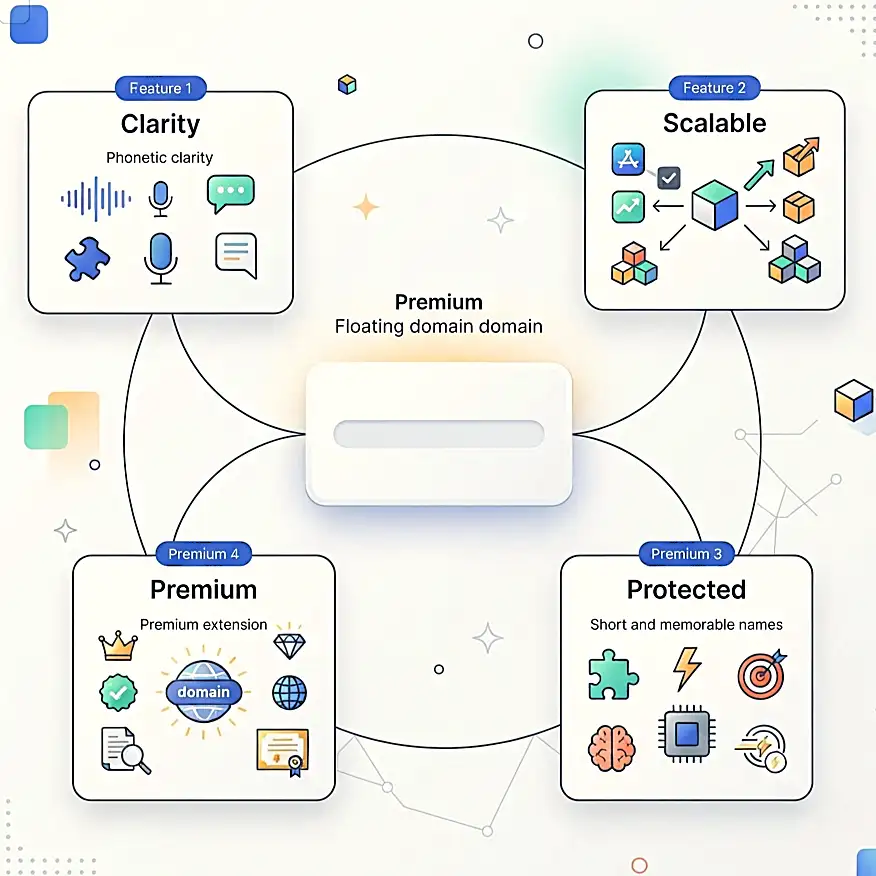
Consequently, the first step in learning how to sell a brandable domain name is auditing your own inventory against these five factors before you write a single listing description.
How to Sell a Brandable Domain Name: Step-by-Step Process
Here is the exact sequence experienced sellers follow, whether the domain is worth four figures or six.
Step 1: Appraise the domain honestly
Use automated appraisal tools as a starting benchmark, then compare against recent comparable sales in the same niche and length category.
Step 2: Verify trademark and legal clarity
Before listing, check the name against active trademark registrations so you avoid disputes after a buyer commits.
Step 3: Choose your sales channel
Decide between a managed marketplace, a direct broker, or outbound outreach to founders, depending on the domain’s value tier.
Step 4: Write a benefit-driven listing
Describe the brand story the name enables rather than just the string of characters itself.
Step 5: Set a realistic but flexible price.
List with a “Buy It Now” price alongside an “Offer” option to capture both impulse buyers and negotiators.
Step 6: Respond quickly to inquiries
Buyer intent for brandable names is often time-sensitive, tied to a specific launch timeline.
Step 7: Negotiate around value, not just price
Anchor conversations to what the name saves the buyer in branding and marketing costs.
Step 8: Use secure escrow for the transaction
Never release a transfer before payment clears through a verified escrow service.
Step 9: Complete the technical transfer
Provide the EPP authorization code and coordinate the registrar-to-registrar transfer promptly.
Sellers who are newer to the domain aftermarket often benefit from seeing this process from the other side first; this first-time buyer’s guide shows exactly what a buyer is evaluating at each stage, which is useful intelligence when you are the one setting the price.
Pricing Your Brandable Domain Correctly
Pricing is where most sellers either lose money or lose buyers. Because brandable names lack the direct keyword-to-traffic logic of exact-match domains, valuation leans heavily on subjective but measurable qualities.
Consider these pricing inputs:
| Valuation Factor | Why It Matters | Impact on Price |
|---|---|---|
| Syllable count and pronunciation ease | Shorter, cleaner sounds are easier for buyers to build a brand voice around | High |
| Extension (.com vs alternatives) | .com still carries the strongest resale confidence among buyers | High |
| Trademark availability | A clean trademark search reduces legal risk for the buyer | Medium to High |
| Industry versatility | Names that fit multiple sectors attract a wider buyer pool | Medium |
| Comparable recent sales | Recent aftermarket data anchors realistic price expectations | High |
| Social handle availability | Matching social handles reduce a buyer’s post-purchase workload | Low to Medium |
Phonetics deserve special attention here, since sound shapes buyer perception long before meaning does. The relationship between how a name sounds and how a brand feels is explored in depth in this piece on the sound-to-meaning science behind brand names, and understanding that science directly informs how confidently you can defend your asking price during negotiation.
Where to List and Sell Brandable Domains
Choosing the right channel matters as much as pricing. Below is a quick comparison of the three most common paths sellers use.
| Sales Channel | Best For | Typical Commission | Speed to Sale |
|---|---|---|---|
| Managed aftermarket marketplace | Mid-value names with broad appeal | 10 to 20 percent | Weeks to a few months |
| Domain broker | High-value, premium names | 10 to 20 percent, sometimes negotiable | Varies, often faster for premium names |
| Direct outbound outreach | Niche names matching a specific company or industry | None, or negotiated privately | Can be fast if targeting is precise |
Many experienced sellers use more than one channel simultaneously, listing on a marketplace while also reaching out directly to a short list of companies that would benefit most from the name.
Brandable vs Keyword Domains: Which Sells Faster
Understanding how brandable names differ from keyword domains helps you set realistic expectations for both pricing and sale timelines. Keyword domains often sell faster to a narrower buyer pool searching for exact-match SEO value, while brandable names take slightly longer to find the right founder but frequently sell for a stronger multiple once they do. A detailed breakdown of these differences is available in this comparison of brandable versus keyword domains, which is worth reviewing before you decide how aggressively to price and market your listing.
How Buyers Evaluate a Brandable Domain Before They Offer
Understanding the buyer’s side of the table changes how you write your listing and how you negotiate. Founders and marketing teams rarely buy on impulse; instead, they run the name through an informal checklist before they ever send an inquiry.

Most serious buyers ask themselves:
- Does this name still sound strong when said aloud in a pitch meeting?
- Will it survive a trademark search in our target markets without conflict?
- Can we secure matching social handles or reasonable alternatives?
- Does the name box us into one narrow product category, or can it grow with us?
- Is the asking price justified compared to building a name in-house through a branding agency?
Sellers who anticipate these questions inside the listing description itself, rather than waiting to be asked, tend to convert inquiries into offers noticeably faster. In practice, a listing that pre-answers the trademark and extensibility questions often moves a buyer from “interested” to “ready to negotiate” within a single email exchange, because it removes the due-diligence work the buyer would otherwise have to do alone.
Negotiation Tactics That Close Deals
Negotiation is where a well-priced domain either becomes a closed sale or stalls indefinitely. A few tactics consistently separate sellers who close deals from those who lose momentum.
Anchor the Conversation to Brand-Building Cost, Not Character Count
Buyers rarely push back on price when they understand what they are actually purchasing: a shortcut past months of naming workshops, trademark clearance, and domain-hunting. Framing your counteroffer around the cost of building this from scratch is consistently more persuasive than defending a number in isolation.
Never Reveal Your Floor Price First
Once a buyer knows your absolute minimum, every future negotiation reference point collapses toward it. Instead, respond to lowball offers with a counter that includes a brief justification, not just a number.
Use Silence and Time Pressure Carefully
If a buyer goes quiet after your counteroffer, resist the urge to immediately drop your price further. A short, polite follow-up after several days, without discounting, often re-engages a genuinely interested buyer without signaling desperation.
Offer Structured Payment Options for Larger Deals
For higher-value brandable names, some buyers hesitate at a large lump sum. Offering a split payment structure, for example half upfront and half at transfer completion through escrow, can unlock deals that would otherwise stall on cash flow concerns alone.
Keep the Tone Collaborative, Not Adversarial
Because brandable names carry emotional weight for the buyer’s future company identity, sellers who negotiate as a collaborative partner in the buyer’s branding journey, rather than as an adversary extracting maximum price, tend to preserve goodwill that occasionally leads to referrals or repeat business.
Legal and Trademark Due Diligence Before You Sell
Skipping legal due diligence is one of the most expensive mistakes a seller can make, since it can unwind a sale after money has already changed hands. Before listing any brandable domain, work through this due-diligence sequence:
- Run a trademark search in the primary jurisdictions your likely buyers operate in, not just your own country.
- Check for prior registered use of the exact name or close phonetic variants in overlapping industries.
- Review your domain’s history for any prior disputes, suspensions, or blacklist flags that could concern a buyer’s legal team.
- Confirm your own registrar account is unlocked and eligible for transfer, since many registrars impose a 60-day lock after certain account changes.
- Prepare a simple sale agreement that states the domain, the price, and the transfer conditions in plain language, ideally reviewed by a professional if the transaction value is substantial.
None of this needs to be intimidating. Most brandable domain sales close without any legal dispute at all, but the sellers who do this groundwork upfront are the ones who can answer a buyer’s legal questions instantly, rather than losing the deal to hesitation and delay. For an authoritative starting point on registration policy and dispute frameworks, sellers can review ICANN’s domain name basics and the WIPO domain name dispute resolution framework, and can run a preliminary trademark check through the USPTO trademark search database before listing a name for sale.
Preparing Your Domain Portfolio for Sale
If you hold more than one brandable domain, treat the sale process as a portfolio exercise rather than handling each name in isolation. Group your names by industry fit, price tier, and readiness level, then prioritize listing your strongest, most defensible names first. Early wins build a track record that some marketplaces and brokers use to grant you better placement or reduced commission tiers over time, which compounds in your favor across future sales.
A useful habit is reviewing your portfolio quarterly against fresh comparable sales data, since brandable domain values shift as industries rise and fall in funding activity. A name tied to a currently fashionable sector, for instance, can command a noticeably higher price during a funding boom than it would during a quieter market period, so timing your listing refresh matters almost as much as the initial pricing decision.
A Realistic Sale Scenario, Start to Finish
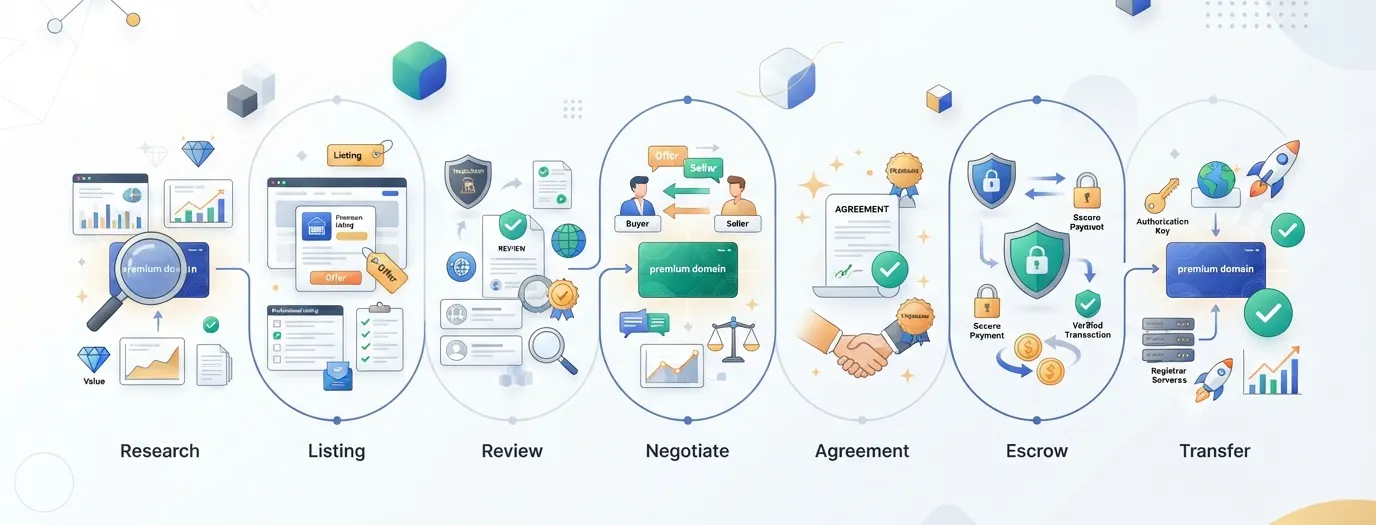
To make the process concrete, walk through how a typical mid-value brandable sale unfolds. Imagine a seller holding a short, invented four-letter .com name with no direct English meaning but a clean, confident sound.
The seller first runs an automated appraisal, which returns a wide range, then narrows that range by pulling three comparable sales of similarly short, sound-first names from the past twelve months. Instead of listing at the top of that range, the seller sets a “Buy It Now” price near the middle and enables an “Offer” option below it, expecting genuine negotiation.
Within the listing description, the seller proactively notes that a preliminary trademark search returned no direct conflicts in the software and consumer product categories, and that matching social handles are available on two major platforms. This single paragraph removes two of the buyer’s biggest due-diligence steps before the first message is even sent.
A buyer reaches out within the first two weeks, offering roughly 70 percent of the asking price. Rather than countering with a flat refusal, the seller responds with a counteroffer at 90 percent, briefly explaining the trademark clearance work already completed and the brand’s cross-category flexibility. The buyer agrees to split the difference, and the seller accepts, since the number still clears the original comparable-sales floor.
Funds move through an escrow service, and once payment clears, the seller provides the EPP authorization code and initiates the registrar transfer the same day. The entire process, from listing to completed transfer, takes just under five weeks, which is faster than average precisely because the seller front-loaded the trademark and social-handle information that most buyers would otherwise have had to investigate themselves.
Common Mistakes Sellers Make When Selling Brandable Domains
Even experienced sellers fall into avoidable traps. Watch for these recurring mistakes:
- Overpricing based on emotional attachment rather than comparable market data, which quietly filters out serious buyers before they ever make contact.
- Ignoring trademark risk and listing a name that later triggers a legal dispute, sometimes after a buyer has already paid and begun building around it.
- Writing thin, generic listings that fail to communicate the brand story a buyer could build, leaving the name to compete on price alone instead of potential.
- Responding slowly to buyer inquiries, which kills momentum on time-sensitive purchases tied to a product launch or funding announcement.
- Skipping escrow to save a small fee, risking the entire transaction if a buyer disputes payment or a seller releases the transfer too early.
- Listing on a single channel only, which limits buyer discovery unnecessarily when a small amount of extra effort could reach a wider audience.
- Failing to update stale listings, since a domain that has sat unchanged for a year with the same price and description can look abandoned rather than actively for sale.
Expert Tips for Selling Brandable Domains Faster
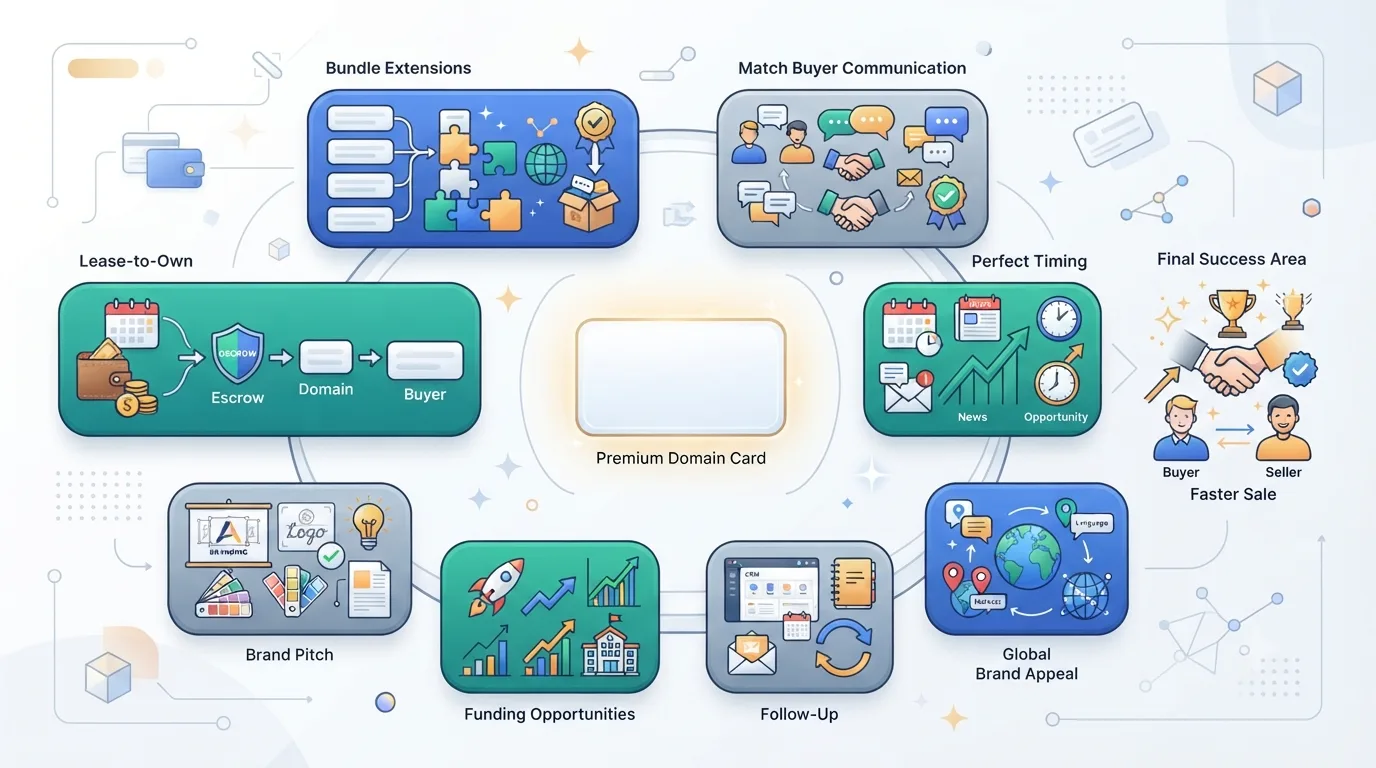
Beyond the basics, a few advanced tactics consistently help sellers close faster and at better terms:
- Bundle related extensions when you own both the .com and a matching alternative, since buyers value consolidated ownership.
- Offer a short-term lease-to-own option for buyers who are not ready to pay the full price upfront but want to secure the name immediately.
- Pre-draft a simple one-page brand pitch showing two or three possible logo directions or taglines, since this helps a buyer visualize the name in use.
- Monitor industry funding news and reach out to newly funded startups whose category matches your domain’s tone.
- Keep negotiation notes on every serious inquiry so you can follow up if a buyer goes quiet and returns later.
- Highlight cross-market versatility explicitly in your listing if the name works equally well in English-speaking and non-English-speaking markets, since this widens your buyer pool considerably.
- Time your listing around industry news cycles, since a wave of funding announcements in a related sector often brings a temporary spike in serious inbound inquiries.
- Respond in the buyer’s tone: a casual founder reaching out informally usually responds better to a warm, conversational reply than a formal, contract-heavy one, at least in the early stages.
Together, these tactics shift the seller from a passive listing owner into an active participant in the sale, which is consistently the difference between a domain that sits unsold for a year and one that closes within a few months.
Frequently Asked Questions About How to Sell a Brandable Domain Name
How much does it cost to sell a brandable domain name?
Selling a brandable domain name typically costs nothing upfront beyond optional appraisal or listing fees. Most marketplaces charge a commission of 10 to 20 percent only after the sale closes, so sellers rarely pay out of pocket to list an asset.
What is the best marketplace to sell a brandable domain name?
The best marketplace depends on your domain’s price point and audience. High-value brandable names often perform well through curated marketplaces and broker networks, while mid-range names sell efficiently through large aftermarket platforms with built-in buyer traffic.
How long does it take to sell a brandable domain name?
A well-priced, well-marketed brandable domain can sell within a few weeks to a few months. Premium or highly niche names may take longer, since finding the right buyer matters more than finding any buyer.
Should I get my domain appraised before selling?
Yes. An appraisal, whether automated or from a professional broker, gives you a defensible starting price and prevents underselling a valuable asset or overpricing one that scares buyers away.
Do I need a broker to sell a brandable domain name?
A broker is not mandatory but is often worth it for high-value names, since brokers bring buyer networks, negotiation experience, and secure escrow handling that individual sellers may lack.
What documents do I need to transfer a domain after sale?
You typically need the domain’s authorization code (EPP code), access to the registrar account, and a completed escrow or sale agreement confirming payment before you release the transfer.
Can I sell a brandable domain that has no exact keyword meaning?
Yes. Brandable domains are frequently invented words with no dictionary meaning at all, and buyers value them precisely because they can be trademarked and built into a distinct brand identity without competing against generic keyword searches.
Is it better to negotiate privately or through a public marketplace listing?
Public marketplace listings create competitive visibility and often surface buyers you would never reach through private outreach alone, while private negotiation can move faster once a serious buyer is identified. Many sellers use both approaches together for the best result.
Turn Your Brandable Domain Into a Closed Sale
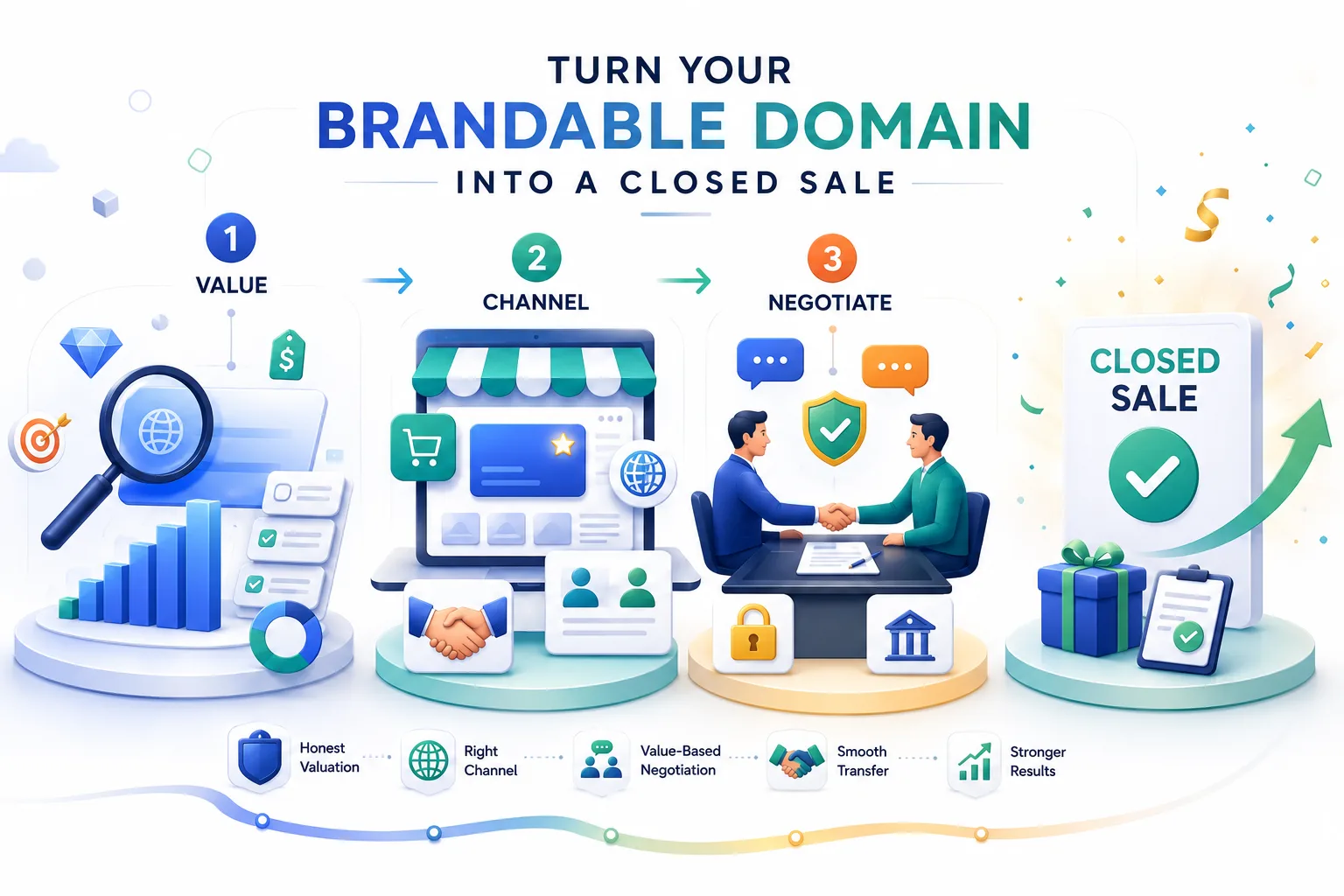
Knowing how to sell a brandable domain name comes down to three disciplines: honest valuation, the right sales channel, and a negotiation approach anchored in brand value rather than raw price. Sellers who follow the appraisal-to-transfer sequence outlined above consistently outperform those who simply park a name and hope a buyer appears, largely because they remove friction at every stage where a hesitant buyer might otherwise walk away. If you are ready to list your next brandable name with a marketplace built around exactly this kind of transaction,and put your name in front of buyers who are already looking for it.