
Buying a brandable domain name means acquiring a short, memorable, and trademark-safe name – either unregistered or on the aftermarket – that functions as a standalone brand identity rather than a literal keyword match. The process involves defining your brand criteria, searching marketplaces or coined-name generators, verifying trademark and ownership status, and completing the transfer through an escrow or registrar-backed checkout. Buyers who follow this sequence avoid the two most common failure points: overpaying for an unverified name and losing money to an unsecured transfer.
Most guides stop at “just search and buy,” which is exactly how first-time buyers end up with a domain they can’t legally use or a payment that vanishes into an unverified seller’s account. This guide walks through the entire acquisition process the way a brandable domain name generator and marketplace workflow actually handles it, from initial name criteria to final transfer confirmation, so you close the deal with confidence instead of guesswork.
What Makes a Domain Name “Brandable”?
A brandable domain name is a name built for recognition, not for search-engine matching. It is typically short, easy to pronounce, easy to spell after hearing it once, and free of hyphens, numbers, or awkward letter combinations. Unlike keyword domains, which rely on exact-match search terms for traffic, brandable names carry no inherent meaning until a company builds equity into them – think of names like Spotify, Kodak, or Zapier.
Before you learn how to buy a brandable domain name, it helps to understand the traits buyers consistently look for:
- Short length: Ideally 4-10 letters, since shorter names are easier to remember and type.
- Phonetic clarity: The name should sound clean when spoken aloud, without ambiguous spelling.
- Emotional or sonic resonance: Certain sounds and syllables trigger specific associations, which is why the science behind how phonetics shape brand perception plays a bigger role in domain selection than most buyers expect.
- Extension flexibility: A strong brandable name usually works across .com, .io, .co, or industry-specific extensions.
- Trademark availability: The name must be legally clear to register as a business or product mark.
If you are still deciding whether a brandable name fits your project better than a descriptive one, this comparison of brandable versus keyword domains breaks down the trade-offs in more depth.
The Role of Memorability in Brand Equity
A brandable domain creates a mental shortcut for customers. Studies in cognitive psychology suggest that names with fewer syllables and stronger phonetic patterns are easier to recall after a single exposure. This matters because repeat recall directly influences word-of-mouth marketing and brand recognition.
Factors That Improve Memorability
- Repeating sounds (alliteration)
- Balanced vowel-consonant structure
- Two-syllable pronunciation patterns
- Distinctive but simple spelling
Examples:
| Domain Style | Memorability Score |
|---|---|
| Zilvo.com | High |
| Xrptqly.com | Very Low |
| CloudAnalyticsSolutions.com | Low |
Linguistic Universality Matters
If your business may expand internationally, consider how the name sounds in other languages. Some words may have unintended meanings or difficult pronunciations in foreign markets.
Questions to ask:
- Can people from different countries pronounce it?
- Does it resemble offensive words in another language?
- Can it be spoken clearly over a phone call?
Step-by-Step: How to Buy a Brandable Domain Name
Once you understand what qualifies as brandable, the actual purchase follows a repeatable sequence. Here is the process broken into clear, sequential steps.
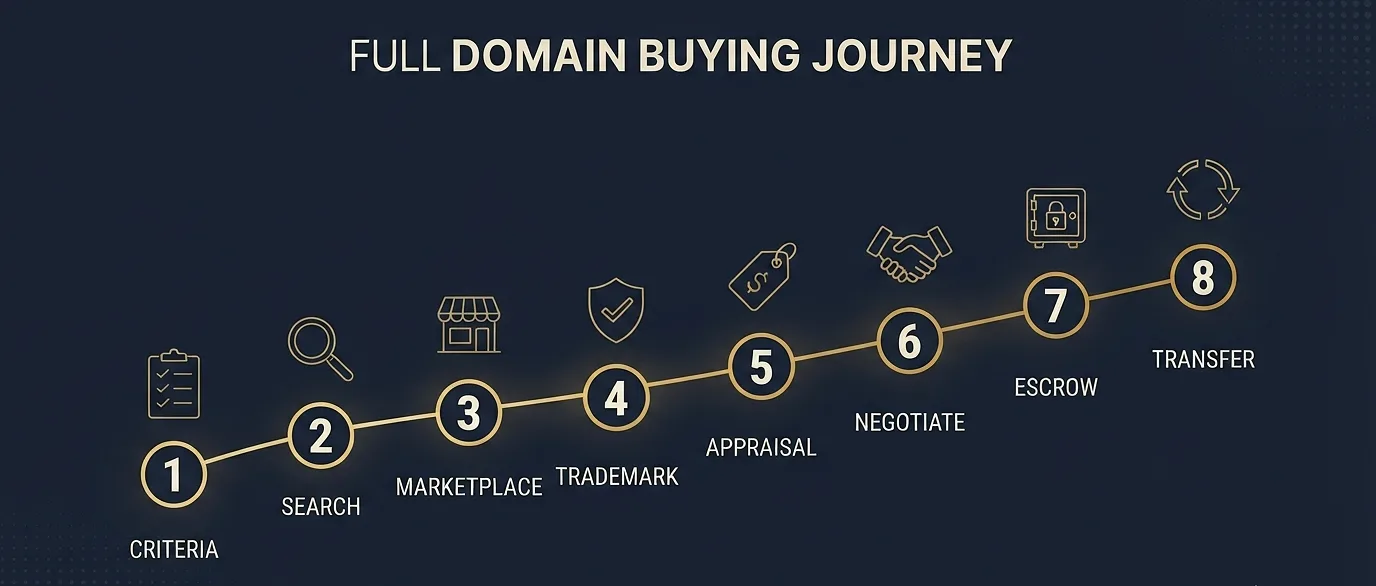
Step 1: Define Your Brand Criteria Before You Search
Start by writing down your non-negotiables: industry, target market, preferred length, acceptable extensions, and budget ceiling. Skipping this step is the fastest way to fall in love with a name that doesn’t actually fit your business positioning.
- List 3-5 keywords or emotions your brand should evoke.
- Decide whether .com is mandatory or whether alternative extensions are acceptable.
- Set a firm maximum budget, including any negotiation buffer.
Create a Brand Personality Profile
Before searching domains, define your brand personality.
Your name should sound:
- Premium
- Playful
- Innovative
- Technical
- Luxury
- Friendly
A fintech startup and a children’s toy company may both want short names, but the emotional tone should be completely different.
Identify Long-Term Business Goals
A domain should accommodate future growth.
For example:
A company starting with:
BestYogaMats.commay struggle if it later sells supplements, clothing, and fitness equipment.
A broader brandable domain allows expansion without rebranding.
Determine Naming Restrictions
Set boundaries before searching:
- No numbers
- No hyphens
- Maximum 8 letters
- Must be pronounceable
- Prefer .com extension
This makes the search process significantly faster.
Step 2: Search Unregistered Names First
Unregistered, coined brandable names are generally cheaper and faster to secure than aftermarket names because there is no existing owner to negotiate with. A dedicated brandable domain generator and complete guide can surface invented, pronounceable names that are already available for direct registration, which shortens this entire step considerably.
Use Multiple Name Generation Techniques
Instead of relying on one generator, try:
Prefix Method
- Neo
- Omni
- Hyper
- Nova
Suffix Method
- ly
- io
- lab
- hub
Blending Method
Combine two concepts:
- Venture + Nova = Ventova
- Pixel + Orbit = Pixorbit
Check for Typing Simplicity
Some available domains are technically pronounceable but difficult to type accurately.
Avoid:
- Double consonants
- Consecutive vowels
- Silent letters
Step 3: Check Aftermarket Marketplaces
If an unregistered name doesn’t fit, aftermarket marketplaces list domains already owned by other parties who are open to selling. Common platforms include:
- Domain auction and marketplace sites for buy-it-now or bidding purchases.
- Domain broker services that negotiate on your behalf for premium or high-value names.
- Direct outreach via WHOIS lookup when a domain isn’t publicly listed for sale.
Understanding Different Listing Types
Not every listed domain is immediately purchasable.
Buy It Now
Fixed price.
Make Offer
Seller expects negotiation.
Auction
Highest bidder wins.
Brokered Listing
Third party manages negotiations.
Knowing the listing type helps you estimate the acquisition timeline.
Investigate Domain History
Before buying an aftermarket domain:
- Check previous website content.
- Review archive snapshots.
- Determine whether the domain was used for spam.
- Look for search-engine penalties.
A bad historical reputation can damage future branding efforts.
Step 4: Verify Trademark and Legal Status
Before committing to any name, confirm it isn’t already trademarked in your target market or industry. A quick search on the USPTO trademark database and a general web search for the name plus your industry term will flag most conflicts early, before you spend money on a name you can’t legally use commercially.
Check Social Media Brand Conflicts
Even if trademarks are available, major social handles may already be heavily established by another company.
Search:
- X (Twitter)
- YouTube
- TikTok
Brand confusion can become a marketing obstacle even without formal trademark disputes.
Evaluate Industry-Specific Restrictions
Certain industries have additional naming regulations.
Examples:
- Financial services
- Healthcare
- Insurance
- Government contracting
Certain terms may require licensing or regulatory approval.
Step 5: Get an Independent Appraisal (For Aftermarket Names)
Sellers routinely list aftermarket domains above fair value. Cross-check the asking price against comparable sales history and length-based pricing benchmarks before you make an offer, so your negotiation position is grounded in data rather than the seller’s asking figure.
Understand Domain Valuation Metrics
Professional appraisers usually consider:
- Length
- Pronunciation
- Commercial intent
- Comparable sales
- Extension quality
- Market demand
- Brand versatility
No single metric determines value.
Compare Multiple Appraisals
Automated valuation tools often produce significantly different estimates.
Use multiple sources and average the results instead of relying on one valuation.
Step 6: Negotiate the Price
Most aftermarket sellers expect negotiation. Open with a figure below your maximum budget, reference comparable sales if you have them, and be prepared to walk away if the seller won’t move toward a reasonable range.
Understand Seller Psychology
Domain owners often value names emotionally.
Negotiation works better when you:
- Stay professional.
- Avoid appearing desperate.
- Present objective market evidence.
- Set a walk-away number.
Consider Payment Structures
Premium domains can sometimes be acquired through:
- Installment payments
- Lease-to-own agreements
- Deferred payments
This can make otherwise expensive names accessible to startups.
Step 7: Use a Secure Escrow Service for Payment
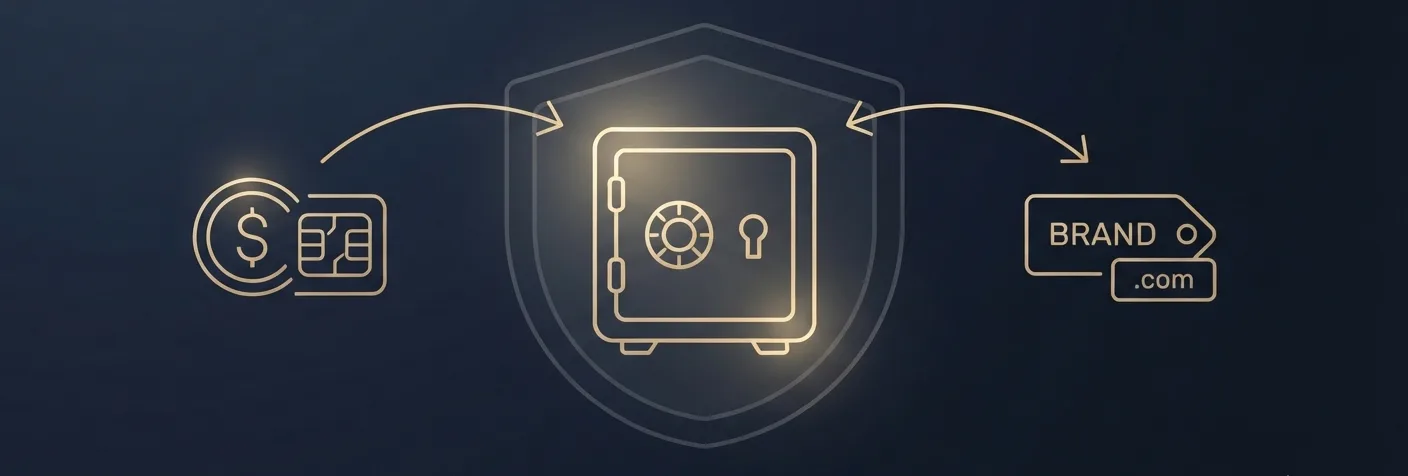
Never send payment directly to a private seller. A licensed escrow provider such as Escrow.com holds your funds until the domain is confirmed as transferred into your registrar account, which protects both sides of the transaction and is the industry-standard way to close a private-party domain sale.
Verify the Seller’s Identity
Before starting escrow:
- Confirm ownership records.
- Request seller verification.
- Verify email addresses.
This reduces fraud risk.
Understand Escrow Fees
Escrow services usually charge a transaction fee.
The fee often depends on:
- Sale price
- Payment method
- International transfers
Budget for these costs before negotiating.
Step 8: Confirm Transfer and Update Ownership Records
After payment clears escrow, confirm the domain has moved to your registrar account, update the WHOIS ownership record, and set up auto-renewal so the name doesn’t lapse. This final confirmation step is where the purchase officially completes.
Activate Security Immediately
After receiving the domain:
- Enable two-factor authentication.
- Lock the domain.
- Update recovery email addresses.
- Review account permissions.
Many valuable domains are lost because buyers delay security setup.
Secure Related Extensions
Consider purchasing:
- .net
- .co
- .io
- Country-code versions
This reduces future brand confusion and defensive registration issues.
Where to Buy a Brandable Domain Name
The table below summarizes the main acquisition routes, so you can match the option to your budget and timeline.
| Source | Best For | Typical Price Range | Speed |
|---|---|---|---|
| Brandable name generator + direct registration | New, unregistered names | Registration fee only | Fastest |
| Domain marketplaces / auctions | Aftermarket names with buy-it-now pricing | Hundreds to low thousands | Fast to moderate |
| Domain broker | Premium or highly competitive names | Thousands and up | Slower, negotiation-driven |
| Direct owner outreach (WHOIS) | Unlisted domains you specifically want | Varies widely | Slowest |
Evaluate Marketplace Reputation
When choosing a platform, consider:
- Buyer protection policies
- Escrow integration
- Customer support
- Domain verification process
- Transfer assistance
The cheapest marketplace is not always the safest.
Consider Specialized Brandable Marketplaces
Some marketplaces curate names manually and provide:
- Logos
- Naming suggestions
- Category filtering
- Professional branding assistance
These services can save considerable research time.
Unregistered vs. Aftermarket: A Quick Comparison
Which Option Is Better for Startups?
Choose Unregistered Domains If:
- Budget is limited.
- You are experimenting with ideas.
- Branding requirements are flexible.
Choose Aftermarket Domains If:
- Branding is a priority.
- You need immediate credibility.
- The business is already funded.
Time-to-Market Considerations
An unregistered domain can be live within minutes.
Aftermarket transactions may take:
- Several days
- One to three weeks
- Longer if negotiations become complicated.
| Factor | Unregistered Brandable Name | Aftermarket Brandable Name |
|---|---|---|
| Cost | Low – standard registration fee | Higher – market-driven pricing |
| Availability | Instant, first-come basis | Depends on seller willingness |
| Negotiation required | None | Usually yes |
| Existing traffic or SEO value | None | Sometimes, if previously used |
| Risk level | Low | Moderate – requires trademark and escrow checks |
Common Mistakes First-Time Buyers Make
- Skipping the trademark check: Buying a name that infringes on an existing mark can force a costly rebrand later.
- Paying before verifying transfer: Wiring funds directly to a seller without escrow protection is one of the most frequent sources of domain-buying fraud.
- Chasing a name that doesn’t fit the brand: A catchy name that doesn’t align with your industry or audience creates confusion instead of recall.
- Ignoring extension strategy: Locking in only one extension without checking availability across common alternatives can create conflicts down the line.
- Overpaying due to emotional attachment: Set your budget ceiling before negotiating, not during.
Ignoring Renewal Costs
Some extensions have high annual renewal fees.
Always check:
- Registration price
- Renewal price
- Transfer price
The cheapest first-year registration can become expensive long term.
Buying Without Testing the Name
Before purchasing:
- Say it aloud.
- Share it with friends.
- Ask others to spell it.
- Search it online.
Simple testing often exposes hidden issues.
Failing to Secure Matching Assets
A brand becomes stronger when these assets align:
- Domain
- Social handles
- Email addresses
- Company name registrations
Expert Tips for Buying a Brandable Domain Name
- Say it out loud before you buy it. If a name is hard to say clearly in a sentence, customers will struggle to search for it too.
- Check social handle availability alongside the domain. A great domain with no matching handles limits brand consistency across channels.
- Favor names with flexible extension options. This protects you if a competitor later registers a similar name on a different extension.
- Document every step of the negotiation and transfer. Keep email records and escrow confirmations in case of a future dispute.
- Consider future scalability. Choose a name broad enough to support new product lines, not just your current offering.
Create a Shortlist Scoring System
Rate each domain from 1–10 on:
| Criteria | Score |
|---|---|
| Memorability | |
| Pronunciation | |
| Extension Quality | |
| Brand Potential | |
| Legal Safety | |
| Scalability |
A scoring system reduces emotional decision-making.
Sleep on the Decision
If spending a significant amount on a domain, wait 24 hours before purchasing.
This cooling-off period often prevents impulsive purchases.
Frequently Asked Questions
How much does a brandable domain name cost?
Brandable domain names typically range from a few hundred dollars for newer, unregistered coined names to five or six figures for short, established, or highly memorable names sold on the aftermarket. Price depends on length, extension, brandability, and sales history.
Is it safe to buy a domain name from a private seller?
Yes, as long as you use a licensed escrow service to hold funds until the domain transfer is confirmed. Never wire money directly to a seller or release payment before the domain appears in your registrar account.
What is the difference between a brandable domain and a keyword domain?
A brandable domain is a short, distinctive, invented or evocative name built for identity and recall, while a keyword domain is built around exact search terms for direct SEO value. Brandable names tend to age better and support long-term brand equity.
How do I check if a domain name is trademarked before buying?
Search the domain name and close variations on your country’s trademark office database, such as USPTO in the United States, and run a general web and WHOIS search to confirm there is no existing brand using the same or a confusingly similar name.
Where can I buy a brandable domain name online?
You can buy brandable domain names through domain marketplaces and auction platforms, brandable-name generators with built-in checkout, or by contacting the current owner directly through WHOIS or a domain broker.
Should I buy multiple brandable domains at once?
Buying several variations can protect your brand strategy, but avoid purchasing too many names that you may never use.
Can a brandable domain increase in value over time?
Yes. As industries grow and short memorable names become scarcer, strong brandable domains can appreciate significantly.
Should I trademark my domain after buying it?
If you intend to build a long-term business around the name, consulting an intellectual property attorney about trademark registration is often advisable.
Can I rebrand around a premium domain later?
Yes. Many companies acquire better domains after achieving initial traction and then rebrand to strengthen market positioning.
Final Thoughts on Buying a Brandable Domain Name
Knowing how to buy a brandable domain name comes down to following a disciplined sequence: define your criteria, search unregistered names first, verify legal status, negotiate with data instead of emotion, and always close through a secure escrow transfer. Buyers who treat this as a structured process, rather than an impulsive purchase, consistently end up with names that hold long-term brand value instead of names they regret within a year.
Treat the Domain as a Strategic Asset
A brandable domain is not merely a web address. It becomes:
- A marketing asset
- A trust signal
- An intellectual property asset
- A long-term business identifier
Businesses frequently spend years building recognition around a single name, which is why the purchase decision deserves careful research and due diligence rather than a rushed registration.