
Cognitive fluency brand names are names the brain can read, pronounce, and recall with minimal mental effort, and that ease is unconsciously interpreted as safety, quality, and credibility. Processing fluency works as a metacognitive signal: when a domain name is phonetically regular, orthographically predictable, and short, the brain attributes the resulting ease to the brand itself, which lifts perceived trust, recall, and purchase intent. For domain buyers, this makes an easy-to-process brandable domain a measurable conversion asset rather than a simple web address.
Founders who want to apply this principle right away can start with a curated brandable domain inventory built around names people can say, spell, and remember.

Key Takeaways
- Cognitive fluency is the felt ease of processing information, and people routinely mistake that ease for truth and quality.
- Fluent names are short, pronounceable, predictably spelled, and built from familiar sound patterns.
- Trust forms fast. Visitors judge a brand in seconds, and the domain name is often the first cue they process.
- Disfluent names create friction: mistyped URLs, lost word-of-mouth, and quiet doubt about legitimacy.
- Testing is practical. A simple spoken, typed, and recall test predicts most fluency problems before you buy.
- Fluency is not genericness. The best names are easy to process and still distinctive enough to protect.
What is Cognitive Fluency?
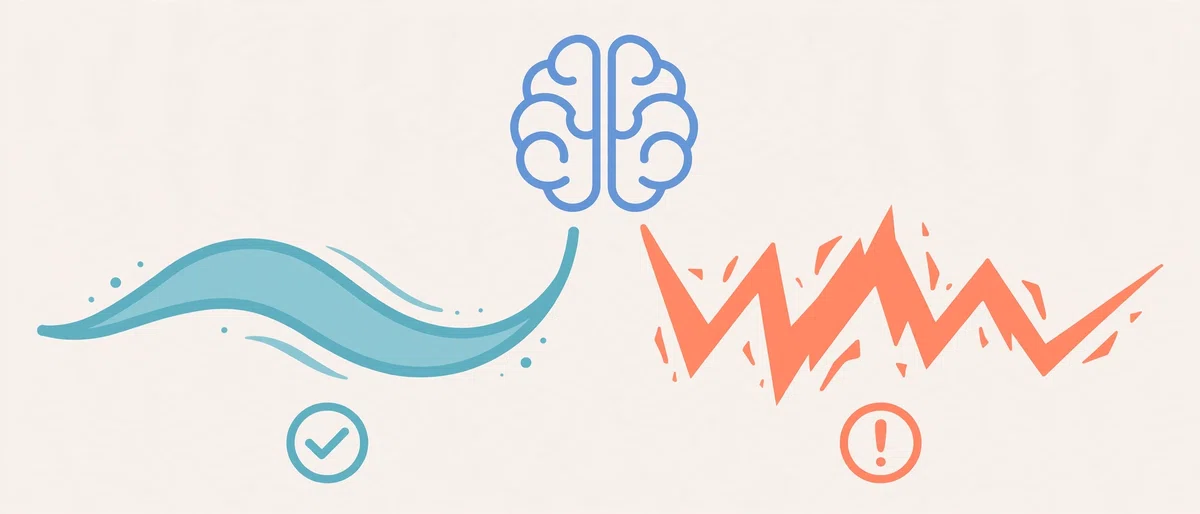
Cognitive fluency is the subjective ease with which the brain processes information. When something feels easy to read, hear, or understand, people judge it more favorably. When it feels hard, they grow suspicious, even if the content is identical.
Psychologists often use the term processing fluency for the same idea. In practice, it covers everything from how quickly you decode a word to how smoothly a sentence flows. Naming is one of the purest applications of the concept, because a brand name is a tiny piece of information that people process again and again.
The Science Behind Processing Fluency
Researchers including Rolf Reber, Norbert Schwarz, and Piotr Winkielman have studied fluency for decades. Their work shows that easy processing produces a mild positive feeling. People then credit that feeling to whatever they are looking at.
Several classic findings illustrate the effect:
- Truth judgments. Statements printed in clearer, higher-contrast text were rated as more likely to be true than the same statements in hard-to-read text.
- Effort estimates. Instructions set in a difficult font were judged to demand more time and effort than identical instructions in a clean font.
- Repetition and liking. Repeated exposure raises liking, a pattern known as the mere exposure effect.
- Aesthetic pleasure. Symmetrical, predictable, and familiar stimuli feel more attractive because the brain handles them quickly.
Each result points the same way. Ease feels good, and the feeling leaks into judgments about the object itself.
Why the Brain Mistakes Ease for Truth
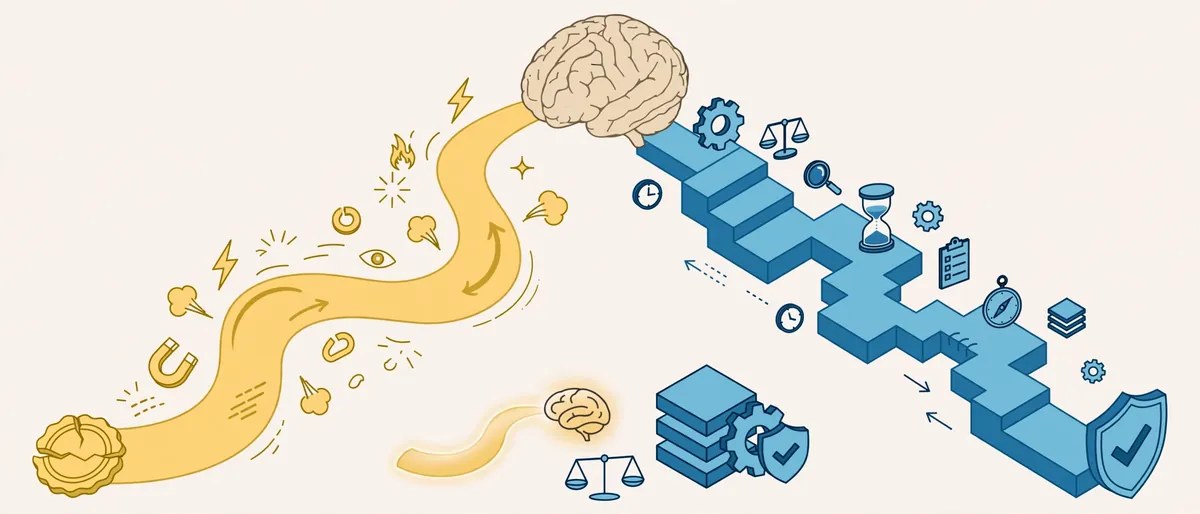
Human attention is limited, so the brain relies on shortcuts. Daniel Kahneman described this as fast, intuitive System 1 thinking versus slow, deliberate System 2 thinking. Fluency belongs to System 1.
Consider what happens when a shopper meets a brand name for the first time. They rarely analyze it. Instead, they register a quick feeling: smooth or clunky. That feeling shapes the next decision, whether to click, share, or leave.
For that reason, cognitive fluency brand names carry a hidden advantage. They pass the first, fastest filter in the customer’s mind.
How Cognitive Fluency Brand Names Build Consumer Trust
Trust is the currency of every online transaction. Customers cannot inspect a product, meet the team, or verify a promise before they click. Therefore, they lean on cues, and the name is the cheapest cue to evaluate.
The Trust Shortcut: From Ease to Credibility
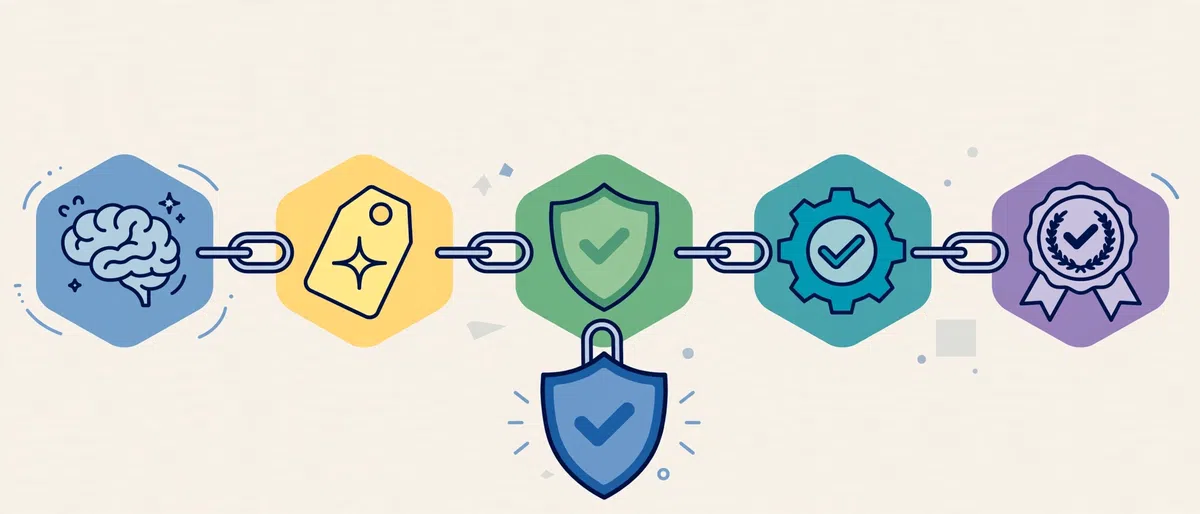
When a name is fluent, the brain runs through a rapid chain of associations. First, the name feels familiar. Next, familiarity signals safety. Finally, safety supports the belief that the company is legitimate.
Here is what fluent names tend to trigger in a visitor’s mind:
- Familiarity: “I feel like I have seen this before.”
- Safety: “Nothing about this seems risky.”
- Competence: “A polished company would pick a polished name.”
- Legitimacy: “This looks like a real business.”
Conversely, a name that forces a pause plants a small seed of doubt. Visitors rarely articulate that doubt. Nevertheless, it lowers click-through, reduces sharing, and weakens recall.
What Research Shows About Easy-to-Pronounce Names
One of the most cited studies on this topic was conducted by Princeton University researchers Adam Alter and Daniel Oppenheimer. They asked students to predict how fictional stocks would perform based solely on their names. The Princeton study on name pronounceability and stock performance found that participants consistently expected stocks with easier-to-pronounce names to perform better, even when the researchers attempted to redirect their attention away from the names themselves.
The team then moved beyond the lab. Across two large U.S. exchanges, more fluent company names and ticker symbols tended to show stronger early performance after listing. They checked intervals from one day up to one year.
Two cautions keep this finding honest:
- The effect was strongest in the short term, so fluency does not replace sound fundamentals.
- The research concerns names and tickers, not domains specifically. Still, the psychological mechanism is the same one that shapes how visitors react to a web address.
In short, even sophisticated investors lean on a feeling of ease. Everyday consumers are no different.
The Six Traits of Cognitive Fluency Brand Names
Not every short name is fluent. Fluency comes from a bundle of traits that work together. The table below summarizes the six that matter most for domain names.
| Trait | What It Means | Fluent Pattern | Disfluent Risk |
|---|---|---|---|
| Pronounceability | Can a stranger say it correctly on the first try? | Clear consonant-vowel rhythm | Stacked consonants, silent letters |
| Spelling predictability | Can they type it after hearing it once? | One obvious spelling | Creative respellings, doubled letters |
| Length | How much working memory does it consume? | 2 syllables, roughly 5 to 9 letters | Long compounds, multiple hyphens |
| Familiar sound patterns | Does it echo known words or morphemes? | Word-like endings and roots | Random letter strings |
| Visual smoothness | Does it look clean in a browser bar and on a logo? | Balanced letter shapes | Look-alike characters, digits mixed in |
| Recall strength | Will it survive a week in memory? | Distinct, image-friendly sound | Bland, generic, or forgettable sound |
1. Pronounceability
Pronounceability is the foundation. If people cannot say a name, they cannot recommend it out loud.
Use this quick rule: a good name follows the phonotactics of the audience’s language. In English, that usually means alternating consonants and vowels, with few awkward clusters. Names like Spotify, Canva, and Zoom roll off the tongue for exactly this reason.
2. Spelling Predictability
Let us walk through each trait with practical guidance.
A name can sound perfect and still fail on the keyboard. When a listener hears “Kwik” and wonders whether it starts with a K or a Q, the name has already lost some fluency.
Ask a simple question: if ten strangers heard this name over the phone, how many would type the correct domain? The higher the number, the more fluent the name.
3. Length and Working Memory
Short names occupy less working memory. Consequently, they are easier to hold, repeat, and retype.
Two syllables often hit the sweet spot. Three syllables can work when the rhythm is natural. Beyond that, fluency tends to decay quickly.
4. Familiar Sound Patterns
The brain processes familiar patterns faster than random ones. Names built from recognizable roots, suffixes, or rhythms feel easier because they plug into existing mental shortcuts.
This is why many strong brandable names blend real word fragments into something new. They feel invented yet instantly readable.
5. Visual Smoothness
Fluency is also visual. A domain appears in browser bars, email signatures, social bios, and printed material.
Watch for these visual friction points:
- Letter combinations that look like other characters, such as “rn” resembling “m”
- Digits swapped for letters, which break both spelling and voice sharing
- Hyphens that interrupt the reading flow
6. Recall Strength
Finally, a fluent name must stick. Ease of processing helps recall, but distinctiveness locks it in.
A name that is easy yet totally bland disappears. A name that is easy and vivid, on the other hand, gives customers something to remember and repeat.
Why Fluency Matters Even More for Domain Names
A brand name lives in many places. A domain name, however, lives in the one place where friction costs real money: the moment someone tries to type, click, or say your address.
Here is how fluency affects the domain in particular.
Direct Traffic and Word-of-Mouth
Word-of-mouth is a fluency test in disguise. When a happy customer recommends your site, they say the name aloud. If the listener cannot spell it, some fraction of that referral evaporates.
Every failed attempt is a lost visit that you never see in analytics.
Typing Accuracy and Misdirected Traffic
Awkward spellings send visitors to the wrong place. Some end up on a competitor’s site. Others land on an error page and give up.
By contrast, a predictable spelling protects your direct traffic and reduces the need to buy defensive variants.
Email, Ads, and Print
Professional communication multiplies exposure. Your domain appears in email addresses, ad display URLs, business cards, and presentations.
A fluent domain reads cleanly in all of these. A clumsy one looks like a typo, which quietly undermines credibility.
Voice Search and AI Assistants
Voice interfaces raise the stakes. Smart speakers and AI assistants convert speech to text, and they stumble on unusual spellings.
If an assistant cannot render your name accurately, users cannot reach you by voice. Therefore, phonetic clarity is becoming a technical requirement as well as a branding preference.
Fluent vs. Disfluent Domain Names: A Direct Comparison
The contrast becomes obvious when you compare typical outcomes side by side.
| Factor | Fluent Domain Name | Disfluent Domain Name |
|---|---|---|
| First impression | Feels smooth and familiar | Feels awkward or unclear |
| Pronunciation | Correct on first attempt | Requires explanation |
| Spelling from memory | High accuracy | Frequent errors |
| Word-of-mouth transfer | Clean and complete | Leaks visitors |
| Perceived legitimacy | Reads as established | Reads as risky or amateur |
| Voice search readiness | Strong | Weak |
| Email and print use | Effortless | Needs clarification |
| Long-term recall | Sticky | Fades quickly |
Notice that none of these factors depends on budget. Instead, they depend on the choices made at naming time. That is why fluency is one of the highest-leverage decisions in early branding.
The Phonetic Layer: Where Sound Meets Meaning
Fluency is not only about letters. Sound carries meaning too. Certain sounds feel soft, fast, strong, or premium, and audiences react to them before they consciously read a word.
If you want to go deeper, explore the science of how sound shapes brand perception. It explains why some names feel trustworthy or energetic purely because of their phonemes.

For naming purposes, three phonetic principles stand out:
- Smooth consonants such as m, l, n, and s often feel gentle and approachable.
- Plosives such as k, t, and p often feel crisp and decisive.
- Open vowels often feel friendly and expansive, while tight vowels can feel precise and technical.
The best cognitive fluency brand names align sound with the intended brand personality. A wellness brand may prefer flowing sounds. A cybersecurity brand may lean toward sharper ones. In both cases, the name remains easy to say.
Cognitive Fluency vs. Keyword Domains: Which Builds More Trust?
Many buyers still ask whether an exact-match keyword domain beats a brandable one. The honest answer is that each has a role, but they solve different problems.
Keyword domains describe what you do. They are instantly understandable, yet they are often long, generic, and hard to protect. Brandable domains, meanwhile, aim to be short, distinctive, and memorable.
For a detailed breakdown, read the comparison of how brandable names stack up against exact-match keyword domains.

Here is the fluency-focused view:
| Dimension | Keyword Domain | Brandable Domain |
|---|---|---|
| Processing ease | High for meaning, lower for length | High for sound and recall |
| Distinctiveness | Low, shared with competitors | High, ownable |
| Trademark strength | Often weak | Often strong |
| Word-of-mouth | Blends into category language | Stands out and travels |
| Long-term flexibility | Limited by the keyword | Grows with the business |
Consequently, brandable names often deliver the stronger fluency payoff over time. They are easy to process and unique enough to own.
If you are new to the category, this guide on what makes a domain truly brandable is a useful starting point.
How to Test a Domain for Cognitive Fluency: Step-by-Step
You do not need a lab to measure fluency. A short, structured test reveals most problems within an hour.
Quick answer: Test a domain by saying it aloud, having strangers spell it, checking it visually, and confirming recall after a delay.
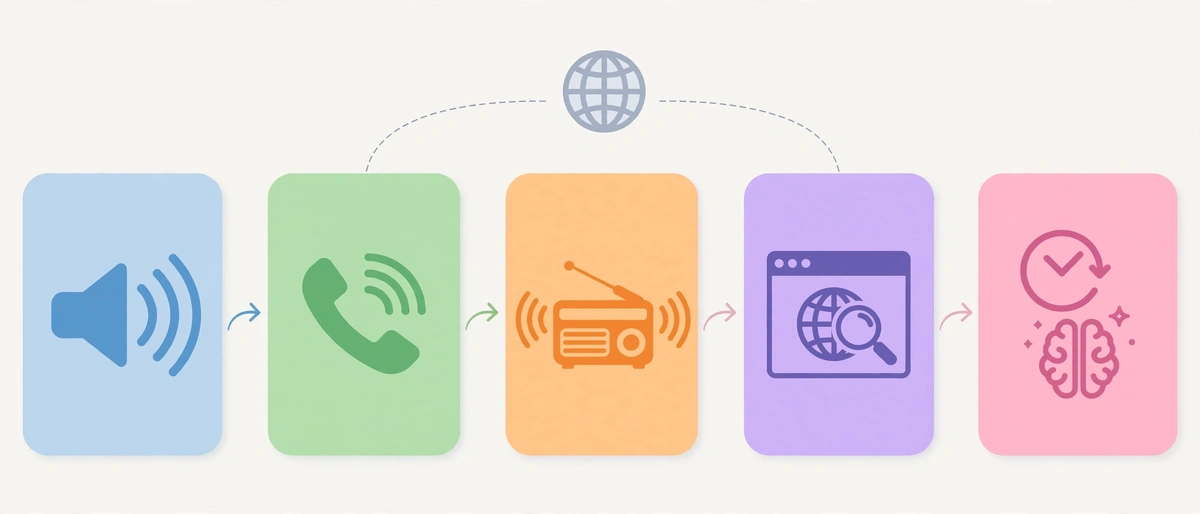
Follow these seven steps:
- Say it out loud. Read the name to yourself, then to a colleague. Note any hesitation about stress or syllables.
- Run the phone test. Have someone read the name to a friend over a call. Ask the friend to type what they heard.
- Run the radio test. Imagine the name in a 10-second audio ad. Would a listener know how to find you?
- Check the visual. Type the domain in a browser bar and place it in an email signature. Look for confusing letter shapes.
- Test recall. Show the name to five people, wait 24 hours, then ask them to write it down.
- Check for unintended meanings. Say the name aloud in the main languages of your audience and confirm it carries no awkward associations.
- Score it. Use the scorecard below to compare candidates objectively.
A Simple Domain Fluency Scorecard
Rate each criterion from 1 (poor) to 5 (excellent). Then total the score.
| Criterion | Weight | Score (1-5) |
|---|---|---|
| Pronounced correctly by strangers | High | |
| Spelled correctly after hearing it once | High | |
| Length (roughly 5 to 9 characters preferred) | Medium | |
| Clean visual appearance in the address bar | Medium | |
| Recalled correctly after 24 hours | High | |
| Free of confusing or negative associations | High |
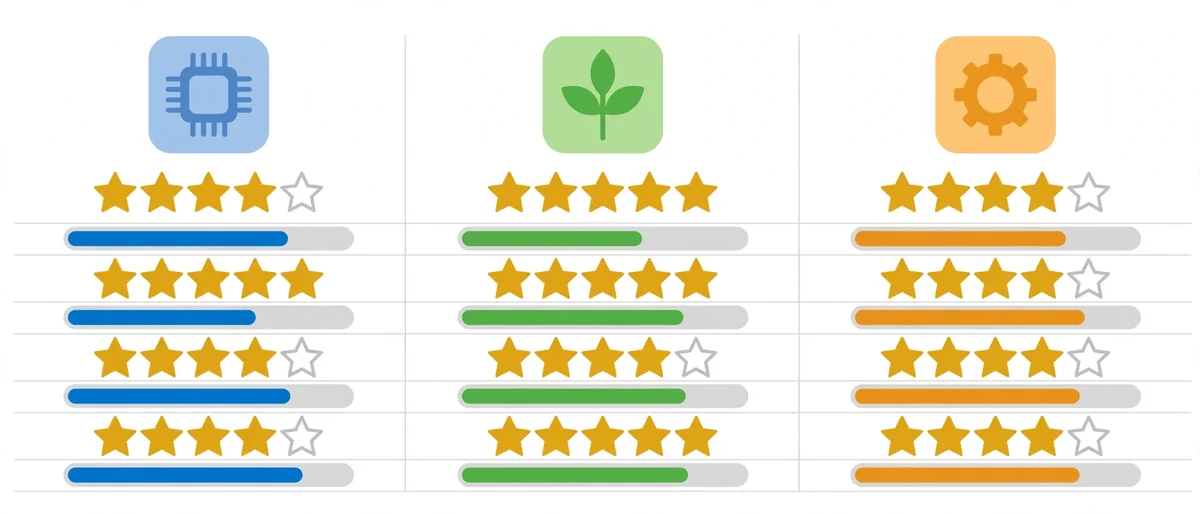
A total above 24 out of 30 usually signals a strong candidate. Anything below 18 deserves a serious second look.
Practical Insights: Applying Fluency to Different Business Models

Fluency is universal, yet its priorities shift with the business. The same six traits carry different weight depending on how customers meet your brand.
- Startups and SaaS: Spoken referrals drive early growth, so pronunciation and spelling matter most. A founder pitching on a call should never have to spell the domain twice.
- E-commerce brands: Shoppers type names on phones and share them on social feeds. Short length and visual smoothness reduce mistyped URLs and abandoned visits.
- Professional services: Buyers use the name as a proxy for competence. A polished, familiar-sounding name supports credibility before the first consultation.
- Consumer apps: Recall and sound symbolism dominate because users discover apps through friends, podcasts, and short videos.
- Local and regional brands: Cultural familiarity matters. Test the name with the specific community you serve, not only with a general audience.
A useful habit is to write down where most of your customers will first hear your name. If the answer is “in conversation,” weight the phone test heavily. If the answer is “in search results,” weight visual clarity and spelling more.
Additionally, plan for growth. A name that fits today’s product but limits tomorrow’s expansion forces a painful change later. Names that are easy to process and semantically flexible give you room to add products without losing the trust you have already earned.
Common Mistakes When Choosing an Easy-to-Process Name

Even experienced founders slip on these points. Avoid them and you will sidestep most fluency problems.
- Over-clever spelling. Dropping vowels or swapping letters looks trendy, yet it forces every listener to ask, “How do you spell that?”
- Adding numbers or hyphens. These break voice sharing and reduce the sense of authority.
- Chasing length for meaning. A long, descriptive name may explain the business, but it strains memory and typing.
- Ignoring the audience’s language. A name that flows in English may stumble in another market.
- Skipping the spoken test. Names that look great on a slide can sound confusing in conversation.
- Confusing familiar with generic. Fluency should make a name feel easy, not interchangeable with every competitor.
- Testing only with teammates. Insiders already know the spelling. Strangers give the honest signal.
Each mistake has the same root cause: the name was judged by its creators instead of by first-time visitors.
Expert Tips for Building Cognitive Fluency Into Your Brand Name
Practitioners who evaluate names regularly tend to converge on a handful of habits. Apply these to sharpen your shortlist.
- Start with sound, then check spelling. A name that sounds right but spells uncertainly can often be fixed by choosing a more predictable variant.
- Prefer rhythm over cleverness. Two balanced syllables usually outperform a witty but clumsy compound.
- Use the “explain it in one breath” rule. If you must explain the spelling, the name is costing you trust.
- Compare at least five candidates. Fluency is relative, so side-by-side scoring exposes differences that a single name hides.
- Pair fluency with a story. Ease gets attention, while a clear meaning gives customers a reason to remember.
- Retest after a shortlist round. Preferences shift once you have looked at the same names for days.
Remember the goal: a name that feels obvious to customers, even though it took real work to find.
Fluency Without Legal Risk: Protect the Name You Choose
An easy name is only valuable if you can keep it. Highly fluent names are also more likely to resemble existing brands, which raises legal risk.
Before you commit, run a proper trademark check on any domain you are considering. This step can help protect your investment and reduce the risk of a costly rebrand later. You can also search existing trademark registrations through the official USPTO trademark search.
Keep these guardrails in mind:
- Search for identical and similar-sounding names in your industry.
- Check both the spelling and the pronunciation, since sound-alike marks can conflict.
- Confirm the name is available on the social handles you plan to use.
- Document your findings before you purchase.
Fluency and distinctiveness work together. The best names pass the ease test and the ownership test.
Keep the Name Consistent Across Every Touchpoint

Fluency compounds through repetition. Each time a customer sees the same clean name in the same form, processing gets easier and trust gets stronger.
Inconsistency breaks that effect. If your domain, social handles, and legal name differ, customers must re-process the brand each time. For that reason, keeping your domain and brand identity consistent protects the fluency you worked to build.
Practical steps include:
- Use one canonical spelling everywhere.
- Match social handles to the domain wherever possible.
- Keep logo typography clean and legible at small sizes.
- Use the same pronunciation in every video, podcast, and sales call.
Fluency, E-E-A-T, and the Trust Signals Search Engines Reward

Trust is not only a human judgment; it also plays an important role in how search engines evaluate content and websites. Google’s guidance on creating helpful, reliable, people-first content emphasizes the importance of experience, expertise, authoritativeness, and trustworthiness when creating content that provides genuine value to users.
A fluent domain supports those signals in indirect but real ways:
- Higher brand searches. Names people can spell and remember get searched directly, which builds brand demand.
- Cleaner citations. Other sites link and mention easy names more accurately.
- Fewer trust barriers. Visitors who feel comfortable stay longer and engage more.
- Better mobile experience. Short, clear names are simpler to type and read on small screens.
Importantly, a fluent name cannot rescue thin content. It works best alongside original, helpful pages written for people first. Think of it as the front door: it should be welcoming, but the house still needs to be worth entering.
Visual Content Ideas to Support This Topic
Rich visuals raise engagement and help readers absorb the concept quickly. Consider these additions when you publish.
- Infographic: “The Fluency Trust Chain” showing ease, familiarity, safety, and trust.
- Diagram: A phone-test flowchart that traces how a spoken name becomes a typed URL.
- Screenshot: A browser address bar comparing a fluent domain with a cluttered one.
- Chart: A bar chart of the six fluency traits with scores for three sample names.
- Checklist graphic: A downloadable one-page version of the seven-step fluency test.
Frequently Asked Questions About Cognitive Fluency Brand Names
What are cognitive fluency brand names?
Cognitive fluency brand names are brand names that are easy to read, say, spell, and remember. Because the brain processes them with little effort, people tend to view them as more familiar, trustworthy, and credible than harder names.
Why does cognitive fluency increase consumer trust?
The brain treats ease of processing as a signal of safety and quality. When a name feels smooth, people attribute that feeling to the brand itself. As a result, fluent names create a quick sense of familiarity and legitimacy before any deeper evaluation begins.
How long should a fluent domain name be?
Most strong fluent names run between roughly five and nine characters and use one to three syllables. Shorter names use less working memory, so they are easier to remember, type, and share. However, rhythm matters as much as raw length.
Are cognitive fluency brand names better than keyword domains?
Neither is universally better. Keyword domains communicate meaning quickly but are often generic and hard to protect. Brandable names built on fluency are usually more distinctive, more memorable, and easier to own, which makes them stronger for long-term brand building.
How can I test whether a domain name is fluent?
Say it aloud, run a phone test where a stranger types what they hear, check how it looks in an address bar, and test recall after 24 hours. Then score each candidate on pronunciation, spelling, length, visuals, and memorability.
Does a fluent domain name improve SEO?
A domain name is not a direct ranking shortcut. Nevertheless, fluent names tend to earn more direct visits, brand searches, and accurate mentions, which support the trust signals that search engines value. Quality content remains essential.
Can a name be too easy to process?
Yes. A name that is easy but generic blends into the crowd and is hard to trademark. The ideal choice combines cognitive fluency with distinctiveness so customers can process it quickly and still recognize it as unique.
Where can I find fluent, brandable domain names?
You can browse ready-to-use options through Aotiv’s brandable domain marketplace, then apply the fluency scorecard above to compare finalists side by side.
Conclusion: Make Ease Your Competitive Advantage
Cognitive fluency brand names win because they remove friction at the exact moment customers form an opinion. Ease of processing becomes familiarity, familiarity becomes safety, and safety becomes trust. Since domain names are often the first thing people meet, the payoff starts before a single page loads.

To recap the essentials:
- Choose short, pronounceable, predictably spelled names.
- Test with strangers using the phone, radio, and recall tests.
- Balance ease with distinctiveness so the name stays ownable.
- Clear trademarks early to protect what you build.
- Keep the name consistent everywhere to compound fluency over time.
The research is clear that people lean on a feeling of ease more than they realize. So give them a name that feels effortless. When you are ready, secure a fluent, trust-building domain for your brand and start turning first impressions into lasting customer confidence.